
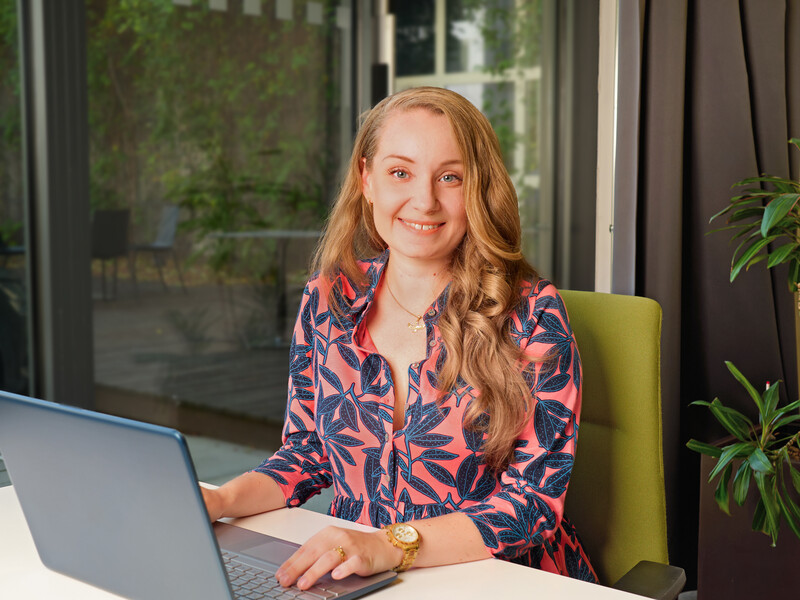
Margareta is an indispensable member of the BioCouriers coordination team. She focuses on southern European countries, but regularly manages the transport of reproductive cells to other countries around the world.
Can you tell us about your role in the transport of reproductive cells? How would you
describe your job to the general public?
Our work often involves clients who are on a long and complicated journey to have a baby.
We are part of this journey and strive to make the transport of reproductive cells as easy as
possible. Specifically, my job is to coordinate this transport, and to communicate with clinics,
couriers, and, most importantly, clients, for whom we are available throughout the entire
process, from planning the transport to a successful delivery.
How did you get into the job of IVF transfer coordinator and how long have you been
doing it?
My path to BioCouriers led through languages. I concentrated on Mediterranean Studies and
have state exams in Italian, Spanish, and Greek. The company needed reinforcement in this
area, and so I have been part of the BC team since June 2022.
What makes working for BioCouriers attractive for you?
Although it may not seem like it, the work of a coordinator for IVF transport is a creative
activity. I've been on the team for more than three years, but almost every week there is a new
challenge. We definitely don't work in any routine, stereotypical way.
Do you specialize in shipping reproductive cells to specific countries? Or is the choice of
destinations rather random?
Since I speak Italian and Spanish, I mainly take care of clients and clinics where these two
languages predominate.
What is the biggest challenge you have had to deal with as a coordinator so far?
There have been several challenges, but I can't think of anything that stands out in particular
right now. However, there is no greater reward than overcoming all of the challenges we've
faced and successfully completing the IVF transport.
Is there any experience that has stuck in your mind? What are the most interesting or
significant cases of reproductive cell transfer that you have witnessed?
Our IVF couriers definitely have interesting experiences from their travels. We tend to get
some unusual requests. I've been asked to transport everything from a dog's remains to fresh
sperm waiting at home in the fridge in an ice cream tub.
How do you see the future of reproductive cell transport in light of new technologies and
regulations?
BioCouriers already uses the latest cryotransport technology. I think that any technological
update in the field of storing such sensitive material as reproductive cells would always be
welcomed.
I believe digitization can make our work as coordinators much easier in many ways, but it
cannot completely replace us yet. No technology can replace empathy and a genuine human
approach to our clients.